

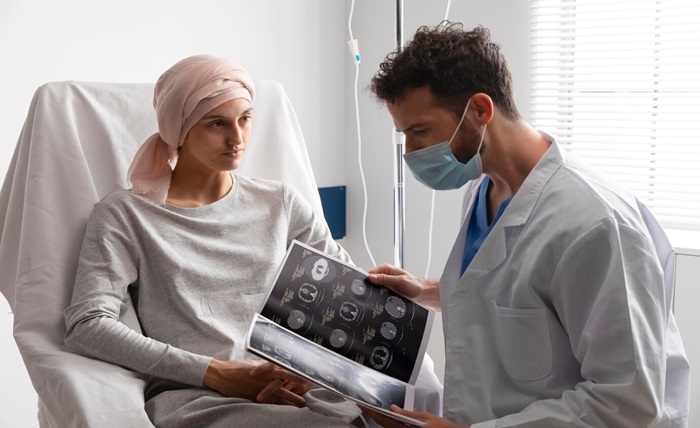
High-energy X-rays are used in radiation therapy to kill cancer cells and reduce symptoms. It’s often part of a combination treatment plan, surgery, and chemotherapy.
For most people, radiation oncology treatments are outpatient procedures. It’s common to receive five daily treatments over several weeks. But the way we deliver radiation is evolving.
Personalized Care
All cells go through a natural growth, division, and multiplication cycle. Cancer is a disease that occurs when your body’s cells develop abnormally and grow out of control, becoming tumors. Radiation therapy uses radiation to destroy these cancerous cells without harming healthy tissue nearby.
Your treatment team will use a variety of techniques to deliver the correct amount of radiation to your tumor and surrounding areas. Among these treatments are intensity-modulated radiation therapy (IMRT), which enables the radiation to be adjusted so that it hits healthy cells less frequently than it does cancerous ones, and three-dimensional conformal radiation therapy (3D-CRT), which helps shape the radiation beam to fit your tumor using images from computed tomography (CT) or magnetic resonance imaging (MRI).
In addition, your radiation oncologist may recommend brachytherapy. This involves placing radioactive sources — such as thin wires, ribbons, or capsules — inside or near your tumor to produce radiation. Your radiation oncologist will insert the sources temporarily or permanently.
While many individuals generally tolerate radiation therapy effectively, there is a possibility of experiencing specific side effects. Seek assistance to cope with your cancer diagnosis and treatment, and consider reaching out to a social worker or psychologist for additional support. Some individuals may find solace in joining a cancer support group. For those exploring San Diego radiation oncology resources may also provide helpful insights and guidance.
Preventive Care
Millions of lives could be saved by improving cancer screening, prompting early detection, and triggering a virtuous prevention cycle. Research is also underway to develop cancer vaccines and other preventive therapies, but a cure for most forms of the disease remains elusive.
Over the past decade, significant advances have given new hope to patients whose cancers were once considered untreatable. Two generations ago, many of the same cancers that currently cause most deaths would have been a death sentence.
Advances like image-guided radiation therapy (IGRT) can help doctors precisely deliver radiation to the tumor by using images taken just before each treatment session. The technique accounts for factors such as the patient’s movement or respiration and enables physicians to deliver higher doses of radiation with greater precision.
Another example is intensity-modulated radiation therapy, or IMRT, which uses computer-controlled specialized applicators to shape the radiation beams precisely to the tumor. This limits the amount of radiation from healthy tissue nearby, allowing for more precise treatments with fewer side effects.
Seek out support to help you manage your cancer diagnosis and treatment. Contemplate joining a support group or conversing with a reliable friend, family member, nurse, social worker, or psychologist. Additionally, online resources can offer valuable assistance.
Targeted Therapies
Some cancers have specific genetic mutations that can be targeted with drugs. These drugs may block signals that help the cancer cells grow and spread. They may also change proteins within the cancer cells so they die or stop them from creating new blood vessels to supply the tumor with nutrients and oxygen.
These targeted medicines target cancer cells specifically, in contrast to chemotherapy, which affects all rapidly dividing cells in the body. They can be used independently or with other medical interventions like radiation and surgery.
Various cancer forms can be treated using targeted pharmaceutical therapy, including melanoma, lung cancer, and colorectal cancer. Some are available only through clinical trials or for people with specific genetic mutations.
Doctors can determine if you might benefit from targeted therapies by having genomic tests to look for gene mutations. These can be done from a sample of your tumor or blood. They can also run tests on your body to check for compounds like proteasome inhibitors, fibroblast growth factor 2, and vascular endothelial growth factor (VEGF) that stimulate the growth of cancer cells.
Some targeted therapy drugs attack these growth factors, while others target the enzymes that digest proteins in cancer cells.
Integrated Care
Until recently, cancer patients were treated with lengthy hospital stays away from home and family. However, advances in radiotherapy have helped to change this and improve patient outcomes. New technologies such as ablative stereotactic radiation, brachytherapy, and hybrid radiotherapy devices have allowed radiologists to treat tumors with less damage to surrounding healthy tissue.
Radiation oncology is helping to transform the world of cancer care with its integrated approach that focuses on prevention, early detection, and treatment. It will continue to shape the future of cancer care with developments in imaging, personalized strategies at all levels of care, integrated multidisciplinary approaches, and global health perspectives.
For example, ESMO promotes the integration of cancer prevention, research, early diagnosis, and treatment by nurturing a community of oncology professionals worldwide who work together across disciplines, countries, and continents. The diversity of cultures, educational backgrounds, and experiences of ESMO members around the globe demonstrates this.
A recent study of primary care-oncology relationships indicated that formal structures were more common than informal ones. These formal relationships often benefited from existing infrastructure, such as shared information systems and electronic health record integration. They also were characterized by solid rapport between providers, including those from different practices, and were often bidirectional referrals. This is in contrast to informal primary care-oncology relationships that are often based on personal referrals and rely on single individuals, which can be challenging to sustain long-term.
